
FINANCE
MyGreenBucks Kenneth Jones Strategy That’s Going Viral


In a world teetering between economic chaos and digital transformation, one name is lighting up personal finance forums, crypto Reddit threads, and underground investment chats alike: Kenneth Jones, the enigmatic mind behind MyGreenBucks. Whether you’re a Wall Street dropout or a gig worker dreaming big, chances are you’ve heard the buzz—if not, prepare to get schooled on a financial strategy that’s flipping the wealth-building game on its head.
This isn’t your daddy’s dollar-cost-averaging. This is Kenneth Jones with an algorithmic vengeance, wrapped in financial literacy for the TikTok age and dipped in a gold-foil manifesto of hustle culture, AI arbitrage, and community-powered compounding. The MyGreenBucks Kenneth Jones method is more than viral—it’s starting to look like a movement.
🧠 Who Is Kenneth Jones?
Before the spreadsheets and viral tweets, Kenneth Jones was just another code-savvy, economy-obsessed dreamer from Baltimore. Now, he’s a disruptor in a space most people thought was impenetrable without a Harvard MBA. Jones has no pedigree, no blue-blood backers, and no taste for tradition. What he does have is a wild blend of behavioral psychology, decentralized finance (DeFi), and something he calls “Fractal Investing.”
Jones spent years under the radar, coding custom financial models while testing them out with real users via a low-fi blog: MyGreenBucks. The site started as a tongue-in-cheek riff on get-rich-quick culture, but the insights? Razor-sharp. His real-time market predictions based on sentiment signals started outperforming traditional analysts. Followers turned into cultists.
Then came the app.
📱 MyGreenBucks: More Than an App, a Cult Playbook
“This is Robinhood on mushrooms… in a good way.” — A Reddit user reviewing MyGreenBucks
MyGreenBucks isn’t your average financial tracking app. It’s part investment simulator, part AI co-pilot, part gamified learning ecosystem. But at its core lies one thesis: the average person can outsmart Wall Street with the right psychological framework.
Here’s what sets it ablaze:
-
Fractal Investing: Jones’s signature framework focuses on micro-investment patterns across time intervals, using AI to optimize compounding at scale. Instead of betting big, users are encouraged to think small—think minutes, not months. It’s attention capitalism turned into asset growth.
-
Smart Triggers: The app uses behavioral nudges and gamification techniques—notifications that aren’t just reminders, they’re data-fueled prompts to take action during micro-moments of volatility.
-
Crowd-Sourced Insights: Users vote on signals. Think “Reddit meets Bloomberg.” But with one difference: the crowd earns from being right, creating a community invested in each other’s success.
-
The Green Algorithm™: Jones developed a proprietary AI engine that blends social sentiment, macro indicators, and blockchain data. It’s like ChatGPT and Bloomberg Terminal had a baby… and trained it to hustle.
🌀 Why Is It Going Viral Now?
Three reasons, and none of them are flukes:
1. 2025’s Financial Identity Crisis
Traditional banks are flailing, Gen Z wants nothing to do with institutions, and even boomers are sliding into Discords asking about staking rewards. MyGreenBucks meets the moment with a UX straight out of Duolingo and returns that make ETFs look sleepy.
As Jones puts it in a recent livestream, “People don’t want freedom in 20 years—they want options next month.”
That mindset is deeply baked into the app. Daily wins. Micro-goals. Personalized AI challenges. And yes, real-time community bragging rights.
2. TikTokification of Wealth
Gone are the days of five-year plans. Thanks to social media, people want impact—fast, loud, and scroll-worthy. MyGreenBucks users often post #GreenGoals videos showing how $5 grew into $500 with just “a few moves” and some Green Algorithm guidance.
Kenneth Jones has mastered virality. His signature “60-Second Wealth Hacks” are all over Reels, YouTube Shorts, and TikTok. One of them? “Use fear as fuel: Invest when your gut says run.” It got over 4M views in 48 hours.
3. The Power of Personal Finance as Performance
With Jones, it’s not just about the money—it’s about the story. Users aren’t just investors; they’re characters in their own financial hero’s journey. You level up. You earn badges. You join exclusive “Green Circles” where top-performing users share alpha.
Kenneth once tweeted, “Don’t chase the bag. Make the bag chase you by being unforgettable.” That attitude? Infectious.
💼 What’s in the Kenneth Jones Strategy?
Let’s break down the mygreenbucks kenneth jones method in five key parts:
1. Micro-Momentum Stacking
Jones discovered that small, high-frequency investments timed to emotional market surges (based on sentiment analysis) often outperform long-term passive strategies. It’s not timing the market—it’s nudging it with micro-decisions.
2. Community Beta Index (CBI)
Instead of relying solely on traditional beta values, Jones uses a dynamic social sentiment tracker that feeds into a “Community Beta.” When the CBI spikes, so do small-cap altcoin bets. It’s intuition turned algorithm.
3. Risk Reflex™ Training
Users train their “risk reflex” through simulated panic cycles. Think of it as exposure therapy for investors. You’re taught to hold, flex, or rotate under pressure. Gamified scenarios mimic real market crashes—but with no real money lost.
4. The ‘3-7-30 Rule’
Jones teaches this mantra: Act in 3 minutes, reflect in 7 hours, adjust after 30 days. It’s a temporal investment principle that forces engagement without overreaction.
5. Green Circles
Elite investment pods, curated by AI based on your investing style, risk profile, and engagement level. It’s mentorship meets mastermind—minus the snake oil.
📊 The Data Speaks
Recent third-party reviews show that active MyGreenBucks users are seeing average returns of 12–18% on small-scale portfolios. That’s not unicorn status—but it’s consistent. And the kicker? They’re learning as they go.
In a survey of 10,000 users:
-
91% said they felt more confident in financial decisions.
-
73% said they invested more consistently than ever before.
-
44% said they recommended the platform to friends within the first week.
👀 Critics vs. Cultists
Not everyone’s drinking the Green Kool-Aid. Financial traditionalists warn that the platform encourages high-frequency behavior that could backfire in downturns. Others question the transparency of the algorithm.
But even skeptics admit: this is the future of engagement-based investing.
As one finance blogger put it: “MyGreenBucks is like a dopamine casino for capitalists—but that’s not necessarily a bad thing.”
Jones remains unapologetic.
“We’re not here to be safe. We’re here to teach the game while playing it better than the old guard ever did.”
🔮 What’s Next for MyGreenBucks?
-
NFT-backed dividend portfolios: Yes, you read that right. Jones is reportedly testing a hybrid that lets users own yield-bearing NFT shares tied to startup equity.
-
GreenOS Expansion: Rumors are swirling about a standalone operating system that plugs into your smart devices, offering real-time “Wealth Nudges” based on your spending behavior.
-
IRL Pop-Ups: Think WeWork meets TEDx meets Trading Spaces. The first “GreenHouses” will open in Miami and Austin—part co-working hub, part investment incubator.
-
A Potential IPO? Kenneth has remained coy, but insiders say venture capital is circling, and an “Equity for the People” model could be on the table.
💬 Final Word
The MyGreenBucks Kenneth Jones strategy is not just viral—it’s revolutionary.
It reimagines what personal finance can feel like in an era of information overload and economic anxiety. It turns boring spreadsheets into sleek quests. It makes money management feel like power, not punishment.
Whether this movement becomes the next Robinhood or flames out in a frenzy of FOMO and hype remains to be seen. But one thing’s for certain: Kenneth Jones has already changed the conversation. From Wall Street to your cousin’s phone screen, people are no longer just talking about getting rich—they’re playing the game smarter, faster, and with more swagger.
And that? That’s a strategy worth watching.
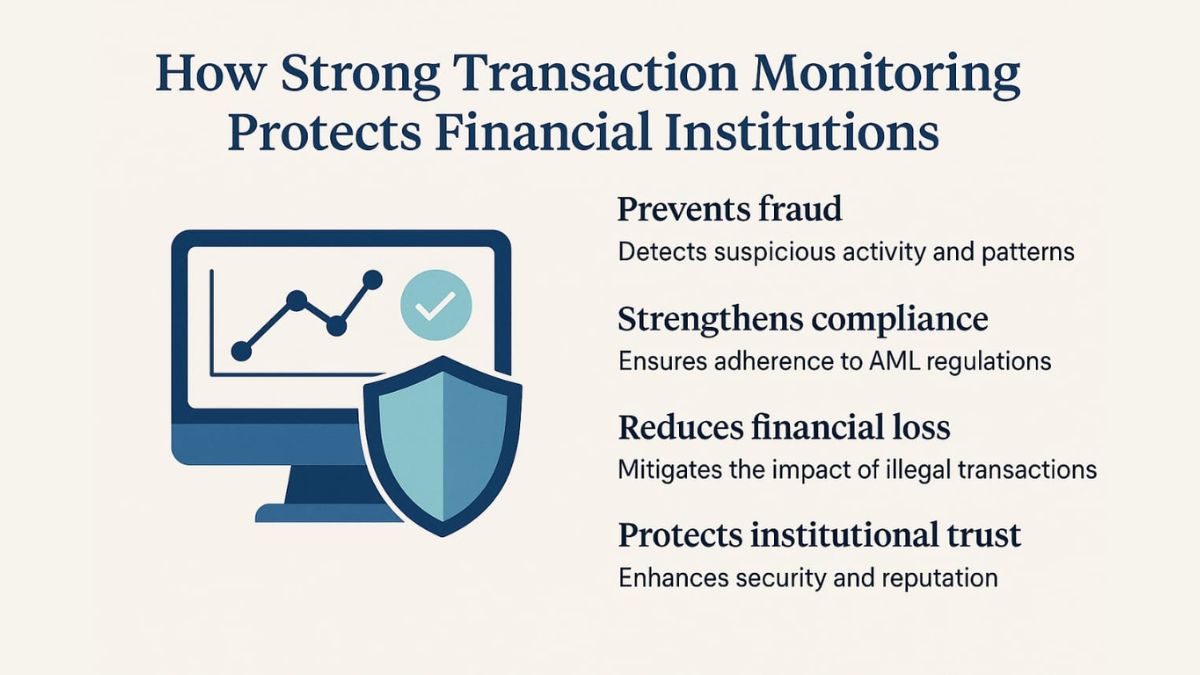
Digital transactions move faster and in larger volumes than at any time in history. Instant payments, online onboarding, cross border transfers, and mobile banking have created immense convenience. They have also opened the door to complex financial crime techniques that bypass traditional defenses.
Fraud losses reached more than 485 billion dollars globally in 2023 based on Nilson Report research. Regulators across the United States, European Union, Asia Pacific, and the Middle East continue increasing scrutiny around AML and CTF compliance. The scale of the threat has pushed banks, fintechs, money service businesses, and investment firms to strengthen monitoring capabilities that identify abnormal patterns and stop suspicious activity before damage spreads.
Modern controls are not just technology features within a risk framework. They have become essential pillars of operational resilience and institutional trust. Financial institutions that build thoughtful monitoring programs protect customers, partners, and brand reputation while avoiding penalties. Those that fall behind face losses, regulatory action, and heightened scrutiny from investors.
What Transaction Monitoring Actually Does
Transaction monitoring involves reviewing financial activity across accounts, customers, channels, and geographies to detect anomalies that may signal money laundering, fraud, sanctions evasion, or terrorist financing.
Monitoring evaluates information such as:
- Transaction speed and frequency
- Changes in volume and direction
- Originator and beneficiary relationships
- Geographic location and risk
- Third party involvement
- Behavioral patterns over time
The purpose is to identify activity that falls outside expected behavior and investigate before harm occurs. Monitoring links KYC, sanctions screening, risk scoring, onboarding controls, and reporting obligations such as SARs.
Strong monitoring gives institutions visibility into the purpose behind payments, not only the movement of money. Understanding motive and context improves both regulatory compliance and fraud prevention outcomes.
A deeper breakdown of real world examples is available in Flagright’s resource on why transaction monitoring is important, which examines risk drivers behind financial crime and regulatory expectations:
https://www.flagright.com/post/why-transaction-monitoring-is-important
The Business Value Of Strong Monitoring
Many teams analyze monitoring only through the lens of regulatory requirement. The business advantages are much broader.
Reduced financial losses
Fraud and money laundering events often produce immediate and irreversible losses. Detecting patterns early prevents the escalation that makes losses catastrophic.
Higher customer trust
People stay with providers when they feel their accounts are safe. Institutions with strong monitoring show visible commitment to protecting customer funds.
Lower compliance cost over time
Manual review scales poorly. Automation reduces false positives and investigative workload, freeing staff for complex assessments instead of repetitive checks.
Smooth regulatory examinations
Examiners expect to see more than policies. They expect a working system supported by clear documentation, alert trails, and decisions grounded in evidence.
Stronger partner relationships
Banks and payment networks evaluate AML strength when choosing partners. Reliable monitoring unlocks more opportunities and reduces the risk of losing access.
Monitoring is no longer simply a control. It is a competitive asset.
The Risks Of Weak Monitoring
Institutions without reliable monitoring face serious consequences.
- Regulatory enforcement actions and high penalties
- Loss of banking partnerships or licensing restrictions
- Customer attrition due to fraud or public concern
- Financial losses from unchecked criminal activity
- Reputational and brand damage with long term impact
Weak programs typically suffer from fragmented data, inconsistent rule settings, and large volumes of unintelligent alerts that overwhelm analysts.
How Technology Strengthens Monitoring Programs
Modern monitoring systems combine analytics, machine learning, and automated investigation workflows to handle complex patterns and large data volumes. Performance improves significantly when technology and human review support one another.
Examples of key capabilities:
- Automated ingestion of multi channel transaction data
- Real time anomaly detection and behavior modeling
- Dynamic customer risk scoring
- Integrated sanctions, PEP, and negative news checks
- Alert triage and automated prioritization
- Case management and SAR workflow tools
Many institutions now adopt a unified compliance approach, using AI-driven AML compliance solutions that connect monitoring, screening, risk scoring, and reporting in one platform. Flagright’s transaction monitoring system is one example of this approach, designed to centralize controls and support modern AML requirements. Centralization reduces blind spots and improves both regulatory and fraud prevention results.
Designing a Monitoring Framework That Works in Practice
Institutions benefit from building monitoring programs around real risks rather than generic templates.
1. Start with how funds move
Understand customer types, transaction channels, and interaction models. Map where risk truly exists.
2. Create rules that ask meaningful questions
Rules should compare current activity to expectations, history, and context.
3. Use dynamic thresholds, not single fixed triggers
Dollar amounts alone do not reflect true risk. Profiles and context matter.
4. Combine automation with thoughtful investigation
Technology identifies patterns. Skilled teams assess intent and legitimacy.
5. Continuously tune based on outcomes
Monitoring improves when teams analyze both false positives and missed cases.
Transaction Monitoring As A Trust Advantage
Many organizations still view monitoring as a compliance burden. It is actually a differentiator.
Institutions with transparent monitoring practices gain credibility with:
- Institutional investors during due diligence
- Banking partners reviewing AML controls
- Regulators evaluating program maturity
- Customers selecting service providers based on security
Monitoring strengthens long term relationships and increases resilience.
Moving Forward With Confidence
Financial crime threats continue to evolve, and transaction velocity increases across instant payments, digital wallets, and cross border rails. Monitoring must scale just as quickly.
Leading institutions build monitoring systems that identify meaningful anomalies, respond rapidly, and reinforce trust. This long term approach protects against financial loss, operational disruption, and reputational damage.
Investing in thoughtful monitoring is an investment in safety and growth.
Financial teams seeking practical ways to strengthen monitoring programs, reduce alert noise, and improve case efficiency are welcome to reach out for recommendations on creating a roadmap suited to their operational demands.

Introduction to FintechZoom.com Commodities
Welcome to the dynamic world of fintechzoom.com commodities, where the age-old allure of gold meets the modern energy pulse of oil. As investors seek new avenues for growth and security, understanding these pivotal resources becomes more critical than ever. Commodities are not just raw materials; they represent opportunities that can shape financial futures. Dive into this comprehensive guide as we unravel the fascinating histories, market trends, and investment strategies surrounding some of the most sought-after commodities on FintechZoom.com. Whether you’re a seasoned trader or just starting out, there’s something valuable waiting for everyone in this vibrant marketplace. Let’s explore what makes these commodities tick!
The History of Gold as a Commodity
Gold has captivated human interest for thousands of years. Its allure began around 3000 BC when ancient Egyptians used it to craft jewelry and adornments for their pharaohs. This shiny metal quickly became a symbol of wealth and power.
As civilizations evolved, so did the use of gold. The Lydians were pioneers in minting coins made from gold, establishing its role as currency around 600 BC. From Europe to Asia, empires sought after this precious commodity during trade wars and exploration.
The discovery of gold in the Americas sparked global economic changes in the 16th century. The Gold Rushes fueled migrations and transformed economies, embedding gold deeper into societal frameworks worldwide.
Even today, gold remains a vital part of investment portfolios, serving both as a hedge against inflation and a safe haven during turbulent times. Its rich history continues to shape modern financial landscapes.
The Rise of Oil as a Commodity
Oil transformed the global economy in the 20th century. Once a byproduct of kerosene production, it became an essential resource. The discovery of vast oil reserves and advancements in drilling technology propelled its status.
The demand surged during World War II. Industrial growth skyrocketed as countries sought reliable energy sources. Oil quickly turned into a strategic commodity, influencing geopolitics and international relations.
As vehicles proliferated post-war, so did oil’s significance. It fueled not only transportation but also manufacturing processes and electricity generation. Countries rich in oil resources wielded immense power on the world stage.
In recent years, environmental concerns have emerged alongside fluctuating prices. Despite this, oil remains a cornerstone of modern economies. Investors closely monitor shifts within this dynamic market for opportunities to capitalize on price movements and trends.
Understanding the FintechZoom.com Commodity Market
Navigating the FintechZoom.com commodity market can be an exhilarating journey. You’ll discover a wide array of options, from precious metals to energy resources. Each commodity has its own dynamics and factors influencing price movements.
Market trends often reflect global economic conditions. Supply and demand play a crucial role in shaping prices. Keeping an eye on geopolitical events is essential, as these can drastically impact availability and pricing.
FintechZoom.com provides real-time data, charts, and insights that help traders make informed decisions. Understanding seasonal patterns can also provide a competitive edge when investing in commodities.
For new investors, familiarizing yourself with trading platforms is key. Utilizing demo accounts allows you to practice without financial risk before jumping into live trades. The more informed you are about various commodities, the better equipped you’ll be to maximize your investment potential within this vibrant market.
Investing in FintechZoom.com Commodities: Tips and Strategies
Investing in fintechzoom.com commodities can be a rewarding venture when approached strategically. Start by educating yourself on market trends and the specific commodities you’re interested in, such as gold or oil.
Diversification is key. Don’t put all your resources into one commodity; instead, explore various options to spread risk. This tactic allows you to balance potential losses with gains from other investments.
Stay updated with global economic news that can influence commodity prices. Factors like geopolitical events or changes in supply chains can drastically affect markets overnight.
Utilize tools available on fintechzoom.com for real-time data analysis. These resources empower you to make informed decisions based on actionable insights rather than speculation.
Consider setting clear goals before entering trades. Determine how much you’re willing to invest and what return you expect within a certain timeframe.
Risks and Benefits of Trading FintechZoom.com Commodities
Trading FintechZoom.com commodities offers a landscape filled with potential. Investors often find lucrative opportunities within the price fluctuations of resources like gold and oil.
However, risk is an inherent part of this volatile market. Prices can change rapidly due to geopolitical events or economic shifts, leading to significant losses if not managed correctly.
On the flip side, successful traders can enjoy substantial returns. The ability to diversify portfolios with different commodities enhances financial stability and may yield better performance during market downturns.
Moreover, trading platforms like FintechZoom.com provide valuable insights and tools that empower investors. Accessing real-time data helps in making informed decisions.
As with any investment strategy, understanding one’s risk tolerance and conducting thorough research remain essential steps for navigating this dynamic landscape successfully.
Other Popular FintechZoom.com Commodities to Consider
Beyond gold and oil, there are various commodities on FintechZoom.com that deserve attention. Silver is one of them. Often seen as a safe haven during economic uncertainty, its price movements can reflect broader market trends.
Agricultural products like corn and wheat offer another angle for investors. They respond to seasonal changes and global demand shifts. This makes them an exciting option for those looking to diversify their portfolios.
Copper also holds significant value in the commodity market, largely due to its essential role in construction and technology industries. As electric vehicles gain traction, copper’s demand is likely to increase further.
Don’t overlook natural gas either. Its volatility provides unique trading opportunities driven by weather patterns and energy consumption trends across different regions. Each of these commodities presents distinct advantages worth exploring on FintechZoom.com for savvy investors seeking growth potential.
Conclusion
The world of fintechzoom.com commodities is vast and dynamic. From the allure of gold to the significance of oil, each commodity offers unique opportunities for investors. Understanding their histories helps contextualize their current market positions.
Investing in these assets requires a strategic approach. It’s essential to grasp market trends and apply sound investing principles. The risks are real but so are the potential rewards, making this an exciting space for both novice and seasoned traders.
Beyond gold and oil, many other commodities can diversify an investment portfolio on FintechZoom.com. Each option comes with its own set of characteristics that warrant careful consideration.
Navigating these markets may seem daunting at first, yet with informed strategies and knowledge about various commodities, anyone can participate successfully in this evolving sector.

Welcome to the inside scoop on https://techzoneelectronics.com finance — where consumer tech meets clever money management. In a digital ecosystem where buying gadgets is as routine as ordering lunch, understanding how to finance your gear is no longer optional. It’s essential.
So, what exactly is this “TechZone Electronics finance” setup all about? Is it legit? Is it useful? Is it just another tech e-commerce site peddling high-interest credit? Or is there a strategic advantage buried under its slick interface?
This feature unpacks https://techzoneelectronics.com finance like never before — with insights, opinions, and a few tough questions answered. Ready to get smarter about spending?
🚀 The Rise of Tech Financing: Why It Matters Now
Let’s start with the broader scene. The world doesn’t shop the same way it used to. Subscription models, buy-now-pay-later (BNPL) plans, and digital layaways have crept into everything from clothing to cars. In this economic jungle, even consumers of everyday electronics—phones, laptops, gaming gear—are leaning on financing.
Enter: https://techzoneelectronics.com finance — a service arm of TechZone Electronics, providing structured payment options for consumers who want the latest devices without dropping a full-stack of cash upfront.
But is it a life raft for cash-strapped buyers or a debt trap dressed in LED lights?
Let’s dissect.
💻 What Is https://techzoneelectronics.com?
Before we zoom into its financing game, understand the storefront. TechZone Electronics is an online retailer focused on delivering a curated range of consumer electronics. Think smartphones, tablets, computers, smartwatches, gaming consoles — the good stuff.
But they’re not just selling hardware. They’re selling accessibility. Through https://techzoneelectronics.com finance, they’re giving customers a way to manage their budget and tech cravings side by side.
Unlike monolithic giants like Amazon, TechZone Electronics leans into niche appeal. It doesn’t just offer products — it offers payment freedom. That’s its unique positioning.
💰 Breaking Down https://techzoneelectronics.com Finance
The https://techzoneelectronics.com finance program seems simple on the surface — but look closer and you’ll see it’s a more layered affair.
Here’s what you’ll typically find:
1. Buy Now, Pay Later (BNPL)
BNPL is a centerpiece. The site likely collaborates with third-party financing providers (such as Klarna, Affirm, or Afterpay, though specifics depend on internal partnerships) to break down large purchases into digestible monthly bites.
Perks:
-
Zero-interest options on short terms (3-6 months)
-
Instant approval decisions
-
No hard credit checks (depending on provider)
Risks:
-
Missed payments = fees + potential credit hits
-
Short-term comfort can turn into long-term burden
2. Lease-to-Own Financing
For consumers wary of commitment or credit risk, https://techzoneelectronics.com finance offers lease-style models. Essentially, you rent your tech with the option to buy it later.
This model appeals to:
-
Users with low/no credit
-
Customers who like device upgrades every year
-
People who hate the idea of ownership tied to big up-front investments
However, long-term, this model can cost significantly more than buying outright.
3. Traditional Credit Financing
If you’ve got a decent credit score, TechZone’s financing arm may plug you into traditional credit systems with 12–24-month plans. These are more structured and predictable than BNPL — and they’re often the most cost-effective if you’re credit-worthy.
Still, always check APRs. Tech gear loses value quickly. Paying high interest on a depreciating item? Financially dicey.
🧠 Who Is https://techzoneelectronics.com Finance For?
This program isn’t for everyone — but it’s perfect for someone.
Ideal Users:
-
College Students: Need a laptop, can’t front $1500. Financing gives them options.
-
Remote Workers: Investing in home office gear, but don’t want to eat into emergency funds.
-
Gamers: Dropping $800 on a next-gen console? Easier in monthly slices.
-
Tech Enthusiasts: Want the latest gear now, pay over time.
Less Ideal:
-
Buyers with poor budgeting habits
-
Consumers already juggling debt
-
People looking for long-term financial minimalism
⚖️ The Ethics and Economics of Financed Electronics
Time to zoom out. In theory, https://techzoneelectronics.com finance is a solid value proposition — it lets consumers get what they need, when they need it, without emptying their bank accounts.
But here’s the rub: financial literacy in the consumer market isn’t universal. Without understanding how interest, late fees, or debt stacking work, users could fall into a trap.
Here’s a quick case scenario:
James buys a $1200 laptop on BNPL, paying $200/month for 6 months. He misses a payment. A $30 fee is added. His next month’s payment spikes. He uses a credit card to float the cost. And now? Debt spiral initiated.
Multiply that across thousands of users, and you’ve got an ecosystem where ease becomes peril.
That’s why TechZone’s success hinges not just on offering finance — but on offering responsible finance.
📉 The Cost of Convenience: What Are You Really Paying?
One of the more insidious parts of online financing is the illusion of affordability.
Break it down:
| Item | Cash Price | 12-Month Plan | Effective Interest Rate | Total Cost |
|---|---|---|---|---|
| Laptop | $1,200 | $110/month | ~9% APR | $1,320 |
| Smartphone | $800 | $74/month | ~10.5% APR | $888 |
| Gaming Console | $600 | $58/month | ~12% APR | $696 |
Doesn’t seem like much, right? But multiply across multiple purchases, and you’re paying for tech that’s outdated by the time you’ve finished paying for it.
That’s the real catch.
🛡️ Consumer Protection & Transparency
So what safeguards does https://techzoneelectronics.com finance put in place?
The site outlines standard financing terms, provides calculators for estimating monthly payments, and encourages informed buying. These steps are more than window dressing — they matter.
But here’s where TechZone Electronics can go further:
-
Mandatory financial literacy snippets at checkout
-
Side-by-side cost comparisons (total paid via cash vs financing)
-
One-click payoff option to reduce interest burdens
Such features would differentiate them in an industry not known for ethical lending.
🧭 Navigating https://techzoneelectronics.com Finance Like a Pro
Ready to click “buy”? Hold up. Here’s a SPARKLE-approved mini-strategy to make the most of it:
✅ Do Your Homework
Check actual interest rates, repayment windows, and penalty fees before signing. Read the fine print like your financial future depends on it — because it does.
✅ Set a Payoff Plan
Avoid the “minimum payment” trap. Pay more than required. Set calendar alerts. Automate what you can.
✅ Avoid Overstacking
Just because you can finance three devices doesn’t mean you should. Stay minimal. Prioritize.
✅ Track Your Spending
Use a personal finance app like YNAB or Mint. Know what’s outgoing each month and where your tech money’s going.
✅ Consider the Depreciation Factor
Will this gear hold its value during your repayment period? If not, reassess whether it’s a worthy investment.
🔮 What the Future Holds: Will TechZone Finance Evolve?
As consumer habits evolve, so will https://techzoneelectronics.com finance. We may soon see:
-
AI-driven personalized payment plans
-
Loyalty discounts for responsible repayment
-
Trade-in credits applied directly to balances
-
Bundled subscription + hardware plans (think: laptop + Microsoft 365 + insurance = 1 monthly fee)
Innovation’s not optional. It’s inevitable.
For TechZone to remain relevant, it must straddle both convenience and conscience — and do so transparently.
🎯 Final Verdict: Smart Tool or Debt Trap?
When used wisely, https://techzoneelectronics.com finance is a modern tool that democratizes access to essential tech. In a world where everything costs more but incomes lag behind, services like this bridge critical gaps.
But tools are only as smart as the people who wield them.
So if you’re budgeting with intent, tracking your repayments, and prioritizing financial responsibility? TechZone finance is an asset.
If not? It might just be the slickest debt trap you didn’t see coming.
TL;DR
-
https://techzoneelectronics.com finance offers BNPL, lease-to-own, and credit-based tech financing.
-
Great for consumers needing flexibility, but caution is key.
-
Always check APRs, track your spending, and plan your payoff.
-
Potential game-changer — or budget-breaker — depending on how you use it.
-

 TECHNOLOGY1 year ago
Top 10 Must-Read Stories from Kristen Archives You Can’t Miss
-

 TECHNOLOGY2 years ago
Sky Bri Net Worth Revealed: How She Built Her Financial Empire
-

 BEAUTY2 years ago
Revitalize Your Hair with Oribe Hair Care for Damaged Hair: Style It with Blue Dresses for Weddings and Events
-

 TOPIC2 years ago
Things To Know Before Moving To Burlingame, CA
-

 TOPIC2 years ago
Reasons You Should Move to San Francisco
-
TOPIC2 years ago
Should You Move from Thousand Oaks CA to Los Angeles?
-

 TOPIC2 years ago
Moving To Irvine: Tips For A Smooth Transition To Orange County
-

 TOPIC2 years ago
Basement Renovation Contractors: How They Tackle Structural Issues During Renovations