
DIGITAL MARKETING
How classical marketing differs from e-marketing


The questions of “how and what” to interest the buyer appeared simultaneously with commodity-money relations. That is, they have accompanied human civilization since its inception. But Philip Kotler created the science of sales and advertising, systematized knowledge about the psychology of the buyer. His book “Marketing Management” became a textbook for students of business schools around the world.
At the end of the 20th century, with the development of the Internet and social networks, the concept of “e-marketing” was formed. It is not similar to the classic one, although it is built on its basis.The Shopify consultant tells how Philip Kotler’s marketing differs from e-marketing.
Classical marketing according to Kotler
Philip Kotler described the basic principles of interaction “producer-product-buyer” in his books.
| Marketing principles according to F. Kotler | Comments from our experts |
| Customer focus | Think about how your product solves consumer problems. |
| 4P-model | The product is viewed through the prism: product-price-place-promotion (what methods will you use to advertise the product). |
| STP-model | Segmentation, targeting, planning – you need to know who, where and how many units of the product will be purchased. |
| Long-term relationships with the client | Repeat purchases and loyalty are more important than quick sales. |
| Strategic function | Marketing principles should be part of business planning. |
| Social responsibility | Not only the business result is important, but also ethical and environmental responsibility |
- Kotler followed the trends of development of society and technologies. Therefore, he developed the principles of Marketing 4.0 and 5.0 for the transition to sales using mobile communications and the Internet.
E-marketing
Electronic marketing is based on the classical developments of F. Kotler. Its goals fully coincide with the postulates of classical theory. But it is focused on the creation of goods and their sales on the Internet.
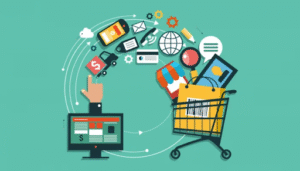
The main components of e-marketing:
- website (web page);
- SEO;
- contextual advertising;
- social networks;
- Email marketing;
- content marketing;
- automation of business processes.
Its significant advantage over classical methods is globalization, i.e. the product will be seen by potential buyers from different countries.
What to choose: classic or technology?
Both types of marketing can and should be combined. See the table for the difference between classical and digital marketing.
| Parameter | E-marketing | Classics by F. Kotler |
| Distribution channel | Internet | TV, radio, outdoor advertising, press |
| Target accuracy | Very high | Limited, only by general characteristics |
| Result measurability | All reactions to the product are tracked in numbers | Inaccurate |
| Cost | Flexible, you can start with a minimal budget | High, since promotion through physical channels costs significant amounts |
| Launch and adjustment speed | Instant, everything is at the specialist’s fingertips | Slow, it is necessary to make changes to the production cycle |
| Customer engagement | High, you can communicate | Low, one-sided delivery of information |
| Personalization | You can change the methods of communication taking into account the target audience | Impossible, one message has been developed for all consumers |
| Reach | 24/7 | Only during the paid time |
| Analytics | Accurate, in real time | Constantly late |
Some conclusions
e-marketing is based on the principles of the classical theory of F. Kotler. The implementation methods are simply different. What to use – digital marketing or classical – is decided by the manufacturer. Optimally – both options.
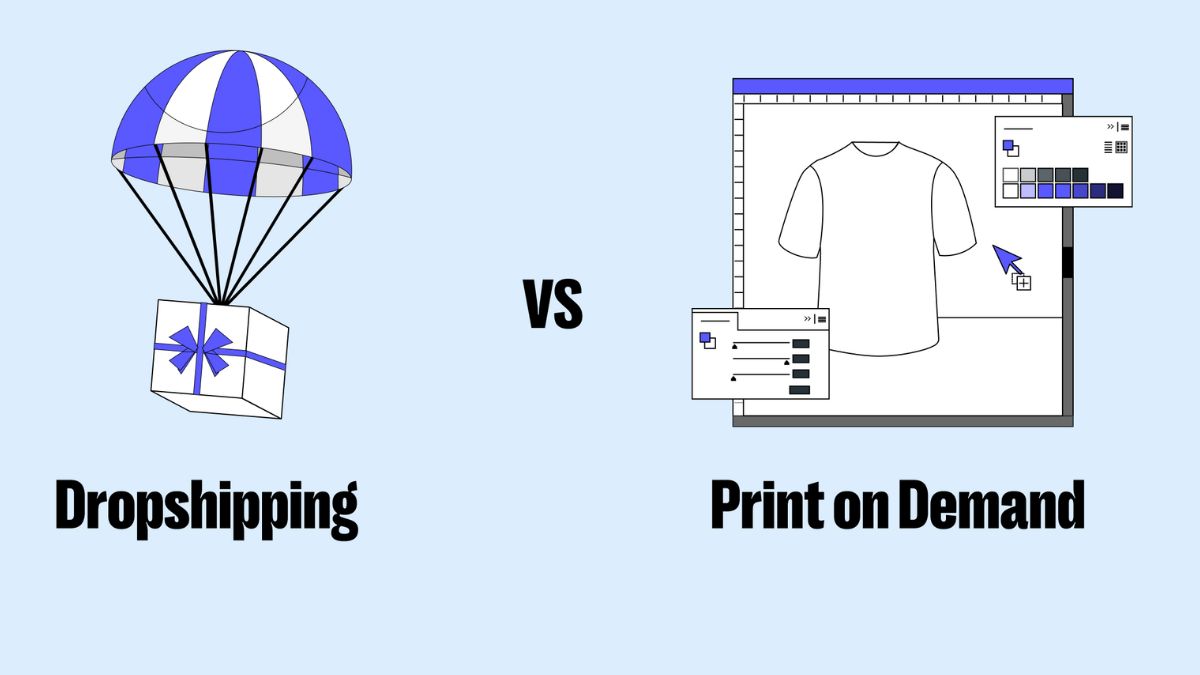
Two of the most popular models that entrepreneurs often consider are Print on Demand (POD) and Dropshipping. Both allow you to start an online store without holding inventory, but they operate in very different ways. This blog will compare the two models in terms of their advantages, challenges, and suitability for various business types. By the end, you’ll have a better understanding of which model aligns best with your business goals and resources.
What is Print on Demand?
Print on Demand (POD) is a business model that allows you to create and sell customized products without the need to invest in bulk inventory. When a customer makes a purchase, the product is manufactured, printed, and shipped directly to the customer by a third-party supplier. This makes it an ideal model for those starting a print on demand business.
POD works for products like clothing, posters, mugs, phone cases, and other customizable items. The key feature of POD is that it allows you to offer a wide range of products that can be tailored to your customers’ preferences without upfront costs. For example, you can sell custom t-shirts with unique designs, personalized mugs, or even limited-edition artwork on canvas.
The main advantage of POD is that you don’t have to worry about managing inventory, and you don’t need to purchase products in bulk. This significantly lowers the upfront costs and risks of running an eCommerce store. However, POD does have its challenges. The per-unit cost of POD products is generally higher compared to bulk purchases, and shipping times can be longer. As you rely on third-party suppliers to fulfill orders, there is also less control over product quality and delivery times, which can affect customer satisfaction.
What is Dropshipping?
Dropshipping is another popular eCommerce model that allows you to sell products without holding inventory. The process is relatively simple: when a customer places an order, the seller forwards the order details to the supplier, who then ships the product directly to the customer.
Unlike POD, which typically focuses on personalized or custom products, dropshipping often involves standardized, mass-produced items. These could range from consumer electronics and home goods to fashion accessories and beauty products. Since you don’t manage the stock, your main job is marketing the products and processing orders.
Dropshipping’s biggest advantage is the low upfront costs. You don’t need to purchase products in bulk or maintain a warehouse, and you can scale your store easily by adding more products to your catalog without worrying about storage. However, there are downsides. Since you rely on suppliers for inventory and fulfillment, you can’t guarantee product quality or timely shipping. Additionally, dropshipping tends to have lower profit margins compared to other eCommerce models, as products are usually sold at a standard price with little room for customization or markup.
Print on Demand vs Dropshipping
Now that we’ve explored both Print on Demand and Dropshipping, let’s break down which model might be right for your specific business goals, market, and budget.
Market Demand
If your target audience is looking for personalized or unique items, Print on Demand is an ideal choice. POD works well for niches that value customization, such as custom hats, T-shirts, or mugs. For example, selling personalized wedding gifts or custom-designed shirts for sports teams can be highly profitable in a POD business.
On the other hand, if you’re looking to tap into a broader market with mass-produced products like electronics, home goods, or beauty supplies, dropshipping might be the better option. Dropshipping allows you to sell a wide range of items quickly and efficiently, without the need for complex customization.
Business Scale and Budget
Your available budget will heavily influence which model works best for you. Print on Demand is suitable for businesses of various sizes, but it does require a degree of flexibility and investment, especially if you plan to scale quickly. While you won’t need to invest in bulk inventory, the higher per-unit costs can add up, especially if your customer base grows rapidly.
Dropshipping, on the other hand, is the better choice for businesses with a smaller budget or those just starting out. Since there is no need to purchase inventory upfront, dropshipping is one of the most cost-effective ways to enter the eCommerce world. The downside is that while it’s easy to start, the low profit margins and reliance on suppliers can present challenges as your business grows.
Profit Potential
One of the key differences between POD and dropshipping lies in profit margins. In Print on Demand, each item tends to be more expensive to produce, but you can price products higher due to their uniqueness and customization. For instance, a custom t-shirt or a personalized mug can be sold for a premium, which allows you to generate higher profits per sale. However, because the per-unit cost is higher, you may need to sell more items to achieve significant profits.
In contrast, dropshipping typically has lower profit margins. Since you’re selling mass-produced items, the price is usually set by the supplier, leaving little room for you to mark up the products. While you can sell a larger volume of products, you’ll need to rely on generating high sales numbers to make a substantial profit.
POD vs Dropshipping: Pros and Cons Comparison
Print on Demand Pros
The biggest advantage of Print on Demand is the ability to offer highly customized products, which can help build a unique brand and attract a dedicated customer base. You don’t need to deal with inventory, which reduces the risks associated with unsold stock. Moreover, the flexibility of offering different designs and products allows you to experiment and find what resonates with your audience.
Print on Demand Cons
However, Print on Demand comes with some drawbacks. The biggest challenge is the higher cost per unit, which reduces your profit margins. Additionally, because you rely on a third-party supplier for fulfillment, you have less control over shipping times and product quality, which can affect customer satisfaction. Finally, POD businesses can face competition from other sellers offering similar products, making it harder to stand out.
Dropshipping Pros
Dropshipping’s main advantage is the low startup cost and the ability to scale quickly. You can list hundreds or even thousands of products without worrying about managing inventory. This makes it an attractive option for entrepreneurs who want to get into eCommerce without committing large amounts of capital. Dropshipping also allows you to test different products and niches with minimal financial risk.
Dropshipping Cons
The major drawback of dropshipping is the low profit margin. Since you are selling products at a fixed price set by the supplier, you won’t have as much flexibility to increase your profit margins. Additionally, dropshipping can be highly competitive, with many sellers offering similar products. Since you have no control over the product quality or shipping times, poor customer experiences can damage your brand reputation.
How to Choose the Right eCommerce Model for Your Business
Choosing between Print on Demand and Dropshipping depends on several factors, including your budget, the products you want to sell, and your long-term business goals.
If you’re aiming for a personalized and unique brand with the potential for higher profit margins, POD is the way to go. It’s perfect for businesses that cater to specific niches where customization is highly valued.
If you want to start an eCommerce business with low upfront costs and a broad range of products, dropshipping might be the better option. It’s a great choice for those looking to scale quickly and test multiple products without financial risk.
Ultimately, you may even find that combining both models can work for your business. For example, you could start with dropshipping to build your customer base and then introduce POD products as your brand grows, allowing you to offer a more personalized experience.
Conclusion
Both Print on Demand and Dropshipping are excellent models for entrepreneurs looking to start an eCommerce business without holding inventory. Each has its own advantages and challenges, so choosing the right model depends on your business goals, niche, and available resources. By understanding the pros and cons of each model, you’ll be able to make an informed decision that aligns with your vision and sets you up for success.
FAQs
Which model is more profitable: Print on Demand or Dropshipping?
Print on Demand can be more profitable per unit because of the ability to charge higher prices for customized products. However, dropshipping might be better for businesses aiming for large volumes of sales with lower profit margins.
Is Print on Demand suitable for mass production?
Print on Demand is not ideal for mass production. It works best for businesses offering small batches of customized or personalized products.
How can I switch from POD to Dropshipping or vice versa?
If you start with one model and decide it’s not the best fit, you can always transition. However, this may require changes to your website, product listings, and supplier relationships.
Which model is better for selling personalized items?
Print on Demand is specifically designed for selling personalized and custom products, making it the ideal choice for businesses that want to offer unique items.
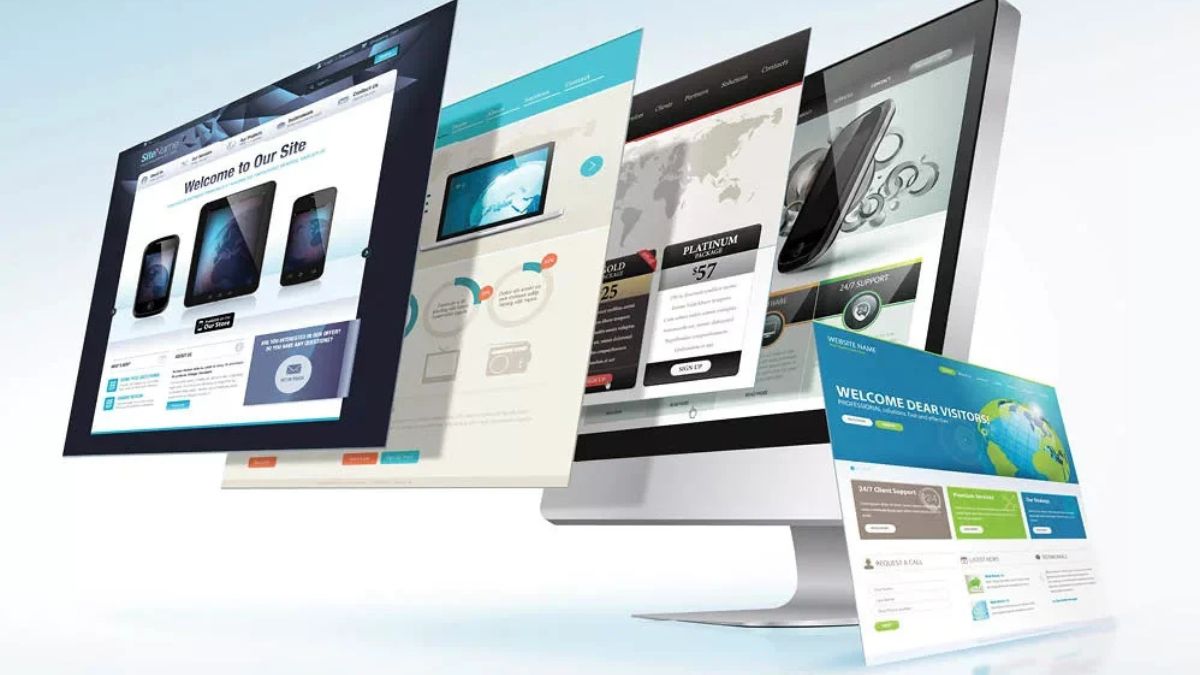
With the fast-evolving businesses and brands, marketing has become an essential tool for the owners to reach their targeted audience. Marketing can be done both ways, digitally and manually. In the fast-paced internet times, digital marketing is preferred more than manual marketing. As people now look for easy and reliable services online rather than wandering outside. Digital marketing is an easy way to reach your targeted audience in the blink of an eye. The innovative technology measures have advanced the level of digital marketing with new tools and features. The internet has enabled users to access your brand and its relatable services and products through web browsers. So, digital marketing makes your brand available on the digital platforms that the users are using and are already familiar with. To pursue digital marketing and how Dubai web design helps in achieving it, let’s scroll through the article and learn more about it.
What is digital marketing
Basically, digital marketing means to reach out to the world through devices that may or may not be connected to the internet, such as radios or TV commercials. Although with the evolving technologies, digital marketing has gone way beyond Television and radio. People are now more focused on the internet as it has come into their hands and fingertips through mobile devices, tablets, and laptops. They spend more time on mobile web browsing and connect to the world immediately. Digital marketing has become an essential part of your life when it comes to advertising your company by competing with popular and relatable industries. If your company has no web and online presence, it’s very hard to be visible to the target audience and market your brand.
What are the types of digital marketing for your web design
- Digital marketing has nearly 15 types that can help promote your business online. They are:
- Content Marketing
- Search Engine Optimization
- Social Media Marketing
- Affiliate and Influencer Marketing
- Email Marketing
- Mobile Marketing
- Audio Marketing
- Chatbot Marketing
- Pay-Per-Click Advertising (PPC)
- Online PR and Reputation Management
- Video Marketing
- Instant Message Marketing
- Virtual Reality Marketing
For you to understand and initiate the best ones in your business incorporation, let’s discuss the six most important ways of digital marketing.
6 widely used types of digital marketing in Dubai web Design
- Content marketing: One of the top priorities is content marketing. It is the main essential tool to market your company or brand’s presence online. It consists of both written and visual content with which the viewer can relate and interact. Like this, it will increase your leads and propose sales. Content has to be updated daily by keeping the target audience in mind. It is the best way to build trust in your audience if it has been conveyed in a professional and structured manner with reliable content shared. The audience comes to you for the latest industry trends and information regarding them, so your content must be aligned with what you are serving them.
- SEO integration: Search Engine Optimization in the content helps it be available on the first ranks in Google when people search for it. Google identifies the ranking of your content according to the keywords searched by people through its algorithms. If it is achieved properly, then Google will make them appear in the highest position in SERP (search engine results page), which will divert traffic to your site and will ultimately bring sales.
- Search engine marketing or pay-per-click (PPC): Search engine marketing refers to the paid advertisement that appears at the top of the SERP. The cost of these ads relies on the number of clicks its link gets, hence it is known as PPC (Pay-Per-Click). When you pay for this SERP tool, your Ad appears with your company’s link. Many people don’t understand that these are ads, and their unconscious clicks can become a great marketing tool.
- Social media marketing: Social media marketing helps to reach out to your audience with the help of social media platforms. You can buy ads or create profiles on these platforms for maximum reach to the audience. These profiles can help you in creating content, videos, and audios that assist in displaying your products and sales that a customer is attracted to. The choice of social media platform is according to the type of content you are willing to share and the number of people using the platform.
- Affiliate and influencer marketing: Collaborating with an affiliate and influencer can help you increase the number of audience by adding theirs. It is crucial to first research the influencers and affiliates who are famous, respectable, and professional in the industry. They can help in creating content relevant to your website and add a link to it for people to reach you. Whenever a sale is made or a link is clicked, you can stop the influencer marketing.
- Email marketing: It is done through an email campaign. Whenever a visitor comes to your website, they can communicate with you through email, and any updates that come can be sent automatically to the email of the subscriber. Any news and updates can be shared with the subscriber when they have subscribed to your website. Email marketing gives a feeling of value to your customers by first receiving updates regarding discounts and special offers. It is an effective way of offering them services that they would not find anywhere else. It will build trust and reliability between you and your customers.
What is manual marketing
Manual marketing is a way of marketing through traditional ways, such as flyers, brochures, banners, TV broadcasts, commercials, etc. It has limited reach to the target audience who are present physically there, such as billboards, and often costs a high budget to consume. That’s why it is less preferred as compared to digital marketing, especially in this age of the internet.
How web design Dubai can offer a complete package for your digital marketing:
Web design Dubai offers high-performing, cost-friendly, certified, and registered digital marketing services that are out of the box. They are:
Search engine optimization is integrated into your website for optimal performance and better reach to your audience. With the use of on-page and off-page strategies, your website can be visible to crawlers who search the keywords relevant to your reach. Highly used keywords are integrated into your website’s content.
Pay-per-click advertising, as mentioned above, is one of the best ways to reach a global presence, with getting paid on every click by the visitor. It will enhance the ROI and conversion rates.
Social media marketing is a great tool for coming in front of your target audience in a matter of seconds. By creating profiles through online platforms, the audience can interact with your products and services easily.
Content marketing is developed by the agency of web design Dubai, through which they provide structured and valid content to their customers to maximize their audience reach. Their company will provide you with services that include blog posts, articles, videos, infographics, and much more. They create high-quality content that can be shared with your audience to gain authority in your industry and enhance customer engagement.
Through email marketing, the web design company in Dubai creates attractive email campaigns that contain personalized messages for your segmented audience. They will receive the updates and news on your behalf.
Conclusion
Digital marketing has become an extension of marketing purposes and is yielding sales. By hiring a good, registered, and certified agency of web design agency in Dubai, you can boost your product sales and do great marketing for your business. For further information, contact Adweb Studio, a professional web design and development company.
FAQs:
What is better, digital marketing or manual marketing?
Of course, digital marketing is way better than manual marketing as it can reach your target audience in a matter of seconds.
How many types of digital marketing are there?
There are a tremendous number of digital marketing options available in the world that include email marketing, content marketing, social media marketing, etc.
What is the purpose of digital marketing?
The purpose of digital marketing is to reach and maximise audience in a limited amount of time effectively through the internet.

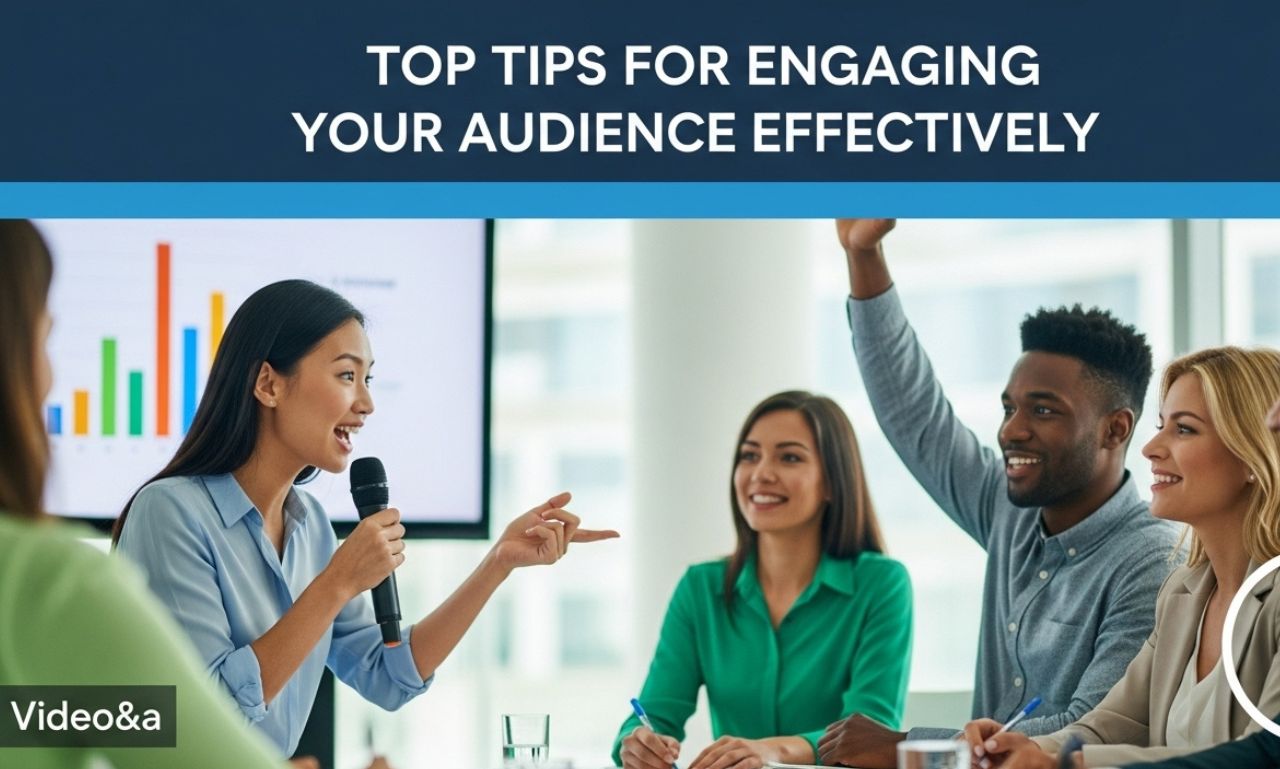
In a world where attention spans are shorter than ever, capturing your audience’s interest can feel like an uphill battle. Enter Video&a—a dynamic approach that blends video content with interactive elements to not only showcase your message but engage viewers in meaningful ways. Imagine transforming passive watchers into enthusiastic participants who actively interact with your brand. This captivating strategy is revolutionizing how we communicate and connect online, making it essential for anyone looking to stand out in today’s crowded digital landscape. Ready to dive deeper? Let’s explore the ins and outs of engaging your audience effectively through Video&a!
What is Video&a?
Video&a is an innovative approach to content creation that combines video and audience interaction seamlessly. This format enhances viewer engagement by allowing audiences not just to watch, but also to participate actively in the experience.
Imagine a live Q&A session where viewers can ask questions in real-time while the host responds through video. It creates a dynamic atmosphere, fostering community and connection.
This method leverages technology’s capabilities, transforming passive viewing into an interactive dialogue. As brands seek more meaningful connections with their followers, video&a stands out as a compelling option.
Whether it’s through social media platforms or dedicated apps, this trend invites creativity. The result? A vibrant exchange of ideas that resonates with viewers on various levels. Engaging your audience has never been more exciting or accessible than with Video&a!
Understanding the Importance of Audience Engagement
Audience engagement is the heartbeat of any successful video&a strategy. It transforms passive viewers into active participants, fostering a sense of community and connection.
When audiences feel engaged, they are more likely to share content and contribute their thoughts. This organic spread increases your reach exponentially, bringing in new viewers who resonate with your message.
Moreover, engaged audiences provide valuable feedback. Their reactions guide future content creation and help refine your approach. Listening to them can spark innovative ideas that you might not have considered otherwise.
In an age where attention spans are short, making an emotional connection becomes crucial. Engaged users stay longer on your platform, increasing retention rates and boosting algorithm favorability across social media channels.
Tips for Creating Engaging Video Content
Creating engaging video content starts with a clear goal. Know what you want to achieve and who your audience is. This clarity shapes every element of your video.
Next, focus on visuals. High-quality images and dynamic shots can hold viewers’ attention longer than static frames. Experiment with different angles or editing techniques to keep the pace lively.
Sound matters too! Good audio enhances the viewing experience. Invest in quality microphones or explore royalty-free music that matches the mood of your content.
Don’t forget about compelling hooks. Start with an intriguing question or statement that piques curiosity right away. You only have seconds to capture interest before viewers decide to click away.
End with a strong call-to-action. Encourage interaction by asking viewers to comment, share, or subscribe for more content related to their interests and needs.
Utilizing Social Media to Connect with Your Audience
Social media serves as a vital bridge between you and your audience. It offers an excellent platform for sharing your video&a content while encouraging real-time interaction.
Use platforms like Instagram, Twitter, and Facebook to promote snippets or teasers of your videos. This creates buzz and entices viewers to engage with the full content.
Engagement doesn’t stop at posting. Responding to comments fosters community. Acknowledge viewer input; it makes them feel valued.
Live Q&A sessions can revolutionize how you connect. This format allows audiences to ask questions directly, creating a dynamic exchange that enhances personal connections.
Utilizing stories or polls can also keep followers involved in ongoing conversations about your video&a projects. These features make engagement fun and interactive while providing valuable insights into what resonates with your viewers the most.
The Power of Storytelling in Captivating Your Viewers
Storytelling transforms mundane content into something memorable. It taps into emotions and creates connections. When viewers resonate with a story, they become invested.
A well-crafted narrative can evoke laughter, sadness, or excitement—each feeling drawing your audience closer to your message. Characters within stories make the content relatable. They allow viewers to see themselves in the situations presented.
Incorporating anecdotes or real-life experiences adds authenticity. This human touch fosters trust and engagement. People remember stories far longer than facts alone.
Visual elements enhance storytelling too. Imagery paired with compelling narratives paints vivid pictures in viewers’ minds, making them more likely to share your video.
Remember that every brand has a unique story worth telling. Discover yours and let it shine through your videos for deeper audience connection and lasting impact.
Incorporating Interactive Elements into Your Videos
Interactive elements transform passive viewing into an engaging experience. Think polls, quizzes, or clickable links that invite viewers to participate actively.
Using on-screen graphics can make your videos more dynamic. Incorporate questions for viewers to ponder as they watch. This keeps them invested in the content.
Consider adding interactive overlays that allow users to choose their path through the video. Each choice could lead them down a different narrative or outcome.
Live chats during premieres are another way to foster interaction. They create a sense of community and urgency, encouraging real-time conversations about your content.
Don’t forget about calls-to-action—encourage comments and feedback directly within the video itself. When audiences feel involved, they’re more likely to share your work and return for future installments.
Measuring and Analyzing Engagement Metrics
Measuring and analyzing engagement metrics is vital for any video&a strategy. It provides insight into how your audience interacts with your content.
Start by tracking key performance indicators (KPIs) such as views, watch time, and click-through rates. These numbers reveal what captures attention and keeps viewers engaged.
Dive deeper into audience retention graphs to identify drop-off points. This can highlight areas where content may need improvement or adjustment.
Social media shares and comments provide qualitative data about viewer sentiment. Are they excited? Confused? Engaged?
Using tools like Google Analytics or social platform insights allows you to gather comprehensive data on your videos’ reach and impact.
Regularly reviewing these metrics enables you to adapt quickly, ensuring that each piece of content resonates more effectively with your audience over time. Adjustments based on real feedback create a cycle of continuous improvement in engagement strategies.
Implementing Feedback from Your Audience to Improve Engagement
Listening to your audience is vital for enhancing engagement. Feedback can serve as a compass, guiding you toward what resonates most with viewers.
Start by encouraging comments and questions on your videos. Create polls or surveys to gather specific insights about content preferences.
Analyze this feedback critically. Look for common themes that emerge across different responses. This will help you identify areas for improvement or new ideas worth exploring.
Don’t shy away from making changes based on viewer input. If they express interest in certain topics, prioritize those in future productions.
Engaging with your audience also means acknowledging their contributions publicly. When viewers see that their opinions matter, they are more likely to stay engaged and loyal to your content.
By actively seeking and implementing feedback, you foster a community of open dialogue, leading to richer interactions and deeper connections with your audience.
Taking Advantage of Live Streaming and Real-Time Interactions
Live streaming has transformed the way brands connect with their audience. It creates a real-time experience that pulls viewers in. Unlike pre-recorded content, live sessions foster spontaneity and authenticity.
During a live stream, you can engage directly through comments or questions. This interaction builds a sense of community among viewers. They feel valued when they see their input acknowledged instantly.
Use platforms like Instagram Live or YouTube for your streams. These channels allow for easy sharing and wider reach. Plus, they often come with built-in tools to enhance engagement, such as polls and Q&A features.
Remember to promote your livestream in advance to generate excitement. Encourage your audience to participate by asking them what topics interest them most.
The thrill of unpredictability adds an exciting layer that traditional videos lack, making it essential for boosting viewer involvement effectively.
Conclusion
Engaging your audience through Video&a is both an art and a science. By understanding the importance of connecting with viewers, you can create content that resonates deeply. Implementing strategies like storytelling, interactive elements, and social media outreach will elevate your video content to new heights.
Measuring engagement metrics allows you to refine your approach continuously. Feedback from your audience serves as a valuable resource for improvement. The dynamic nature of live streaming offers real-time connections that can foster loyalty and community among viewers.
As you explore these tips, remember that authentic engagement comes from genuine interest in your audience’s needs and desires. Embrace this journey towards creating compelling Video&a experiences that leave lasting impressions on those who watch.
-

 TECHNOLOGY9 months ago
Top 10 Must-Read Stories from Kristen Archives You Can’t Miss
-

 TECHNOLOGY1 year ago
Sky Bri Net Worth Revealed: How She Built Her Financial Empire
-

 TOPIC1 year ago
Basement Renovation Contractors: How They Tackle Structural Issues During Renovations
-

 TOPIC11 months ago
5 Reasons the //Vital-Mag.Net Blog Dominates Lifestyle
-

 BEAUTY1 year ago
Revitalize Your Hair with Oribe Hair Care for Damaged Hair: Style It with Blue Dresses for Weddings and Events
-

 TOPIC10 months ago
Top 10 Articles from the ://Vital-Mag.net Blog That You Can’t Miss
-

 CRYPTO1 year ago
Crypto30x.com Review: Is It the Right Platform for You?
-

 BUSINESS9 months ago
TraceLoans Explained What You Need to Know